Where now the Horse and the Rider
Astana, Kazakhstan, 2024
Happy lunar new year everyone to the year of the horse! This is now a most auspicious time to talk about the World Nomad Games, this festival of metal and sky, this love letter to horses - alphachads with their fabulous hair and rockhard chins, galloping straight down the saga of mankind.
The image of a rider is such a primal meme. A horse and its human accessory trotting under the rugged dome of this world, lightning spearing the distant peaks, a spark of ice crystal breaking in spring, parting a dark path through the swaying grass.
The world opens up - the man is no longer an ape stuck on a tree, the horse is no longer just a mildly skittish mammal munching on grass. Together we transcend ourselves. The horse becomes a bridge between our dreams and the infinite possibilities of the mountains and sky.
Here in Astana, Kazakhstan, this is a festival of the blood and the heart. Occasionally an armoured rider is set on fire, and he and his horse hurtle through the crowd. Does the horse feel the primordial heat and power? Does it know it is in a show, and not in a forest fire?
Ahead of an echo of hooves they thunder out of sight.
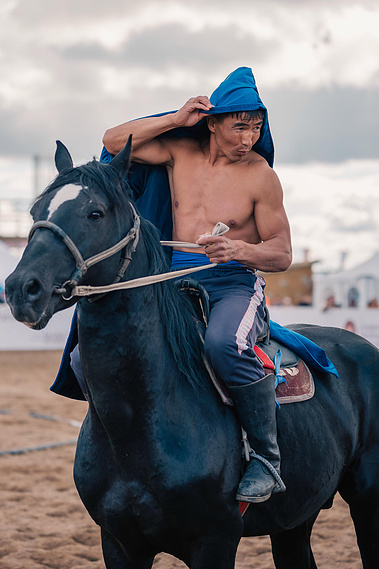
Walk beyond the ranks of archers, tracing the ways of their ancestors through the curve of their wooden bows to the feathered shaft to the arrowhead to the mark. Squat low as the horse archers gallop past, pure instinct and fire, letting loose from the saddle. Turn left by the musclemen grappling on horseback, and take a seat among the Kazakh and Kyrgyz fans for the Kok Boru finals. This is the El Classico of horsemanship sports.


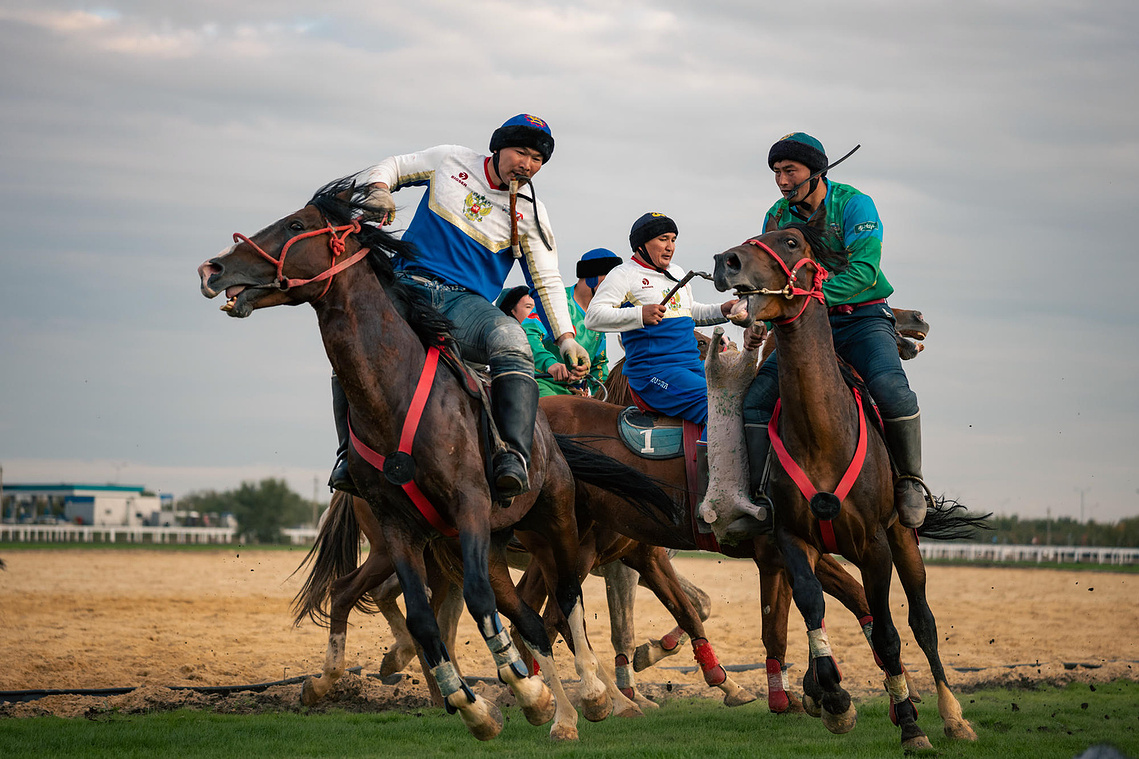
5 riders play on each side, and they trot majestically to the center of the stadium accompanied by extremely patriotic sounding socialist music. They salute the crowd like gladiators, the referee places the headless goat in the middle of the field, and -
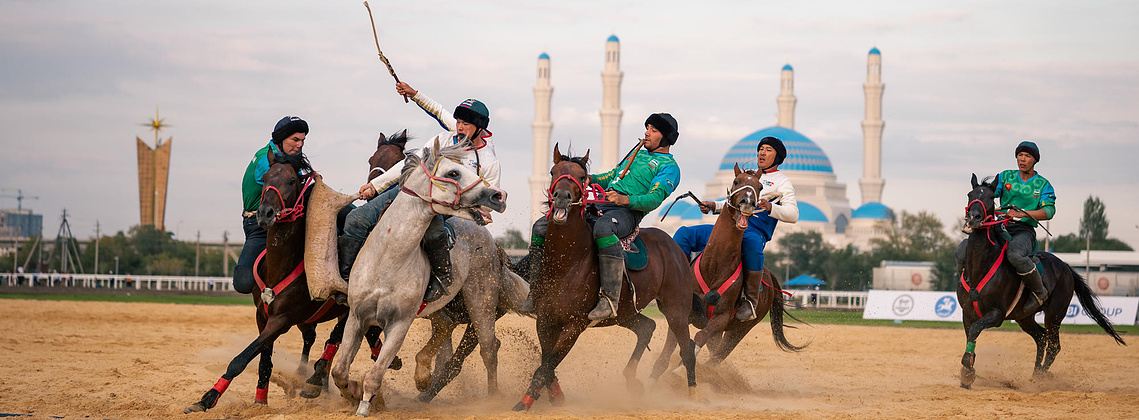
The horses slam into each other and through the dust a rider streaks towards the goat. He bites onto his whip to free his hands, sweeps up the goat at full gallop, tucks it between his thigh and the saddle, and urges his horse to squeeze through the chaos towards the goal. By the grace of the eternal blue sky, if the gauntlet of angry opposing riders do not trip his horse, break his fingers, or gift him a concussion or twelve, he will thunder down the home stretch and throw himself - man, horse, well-tenderised goat - down a hole in the ground.
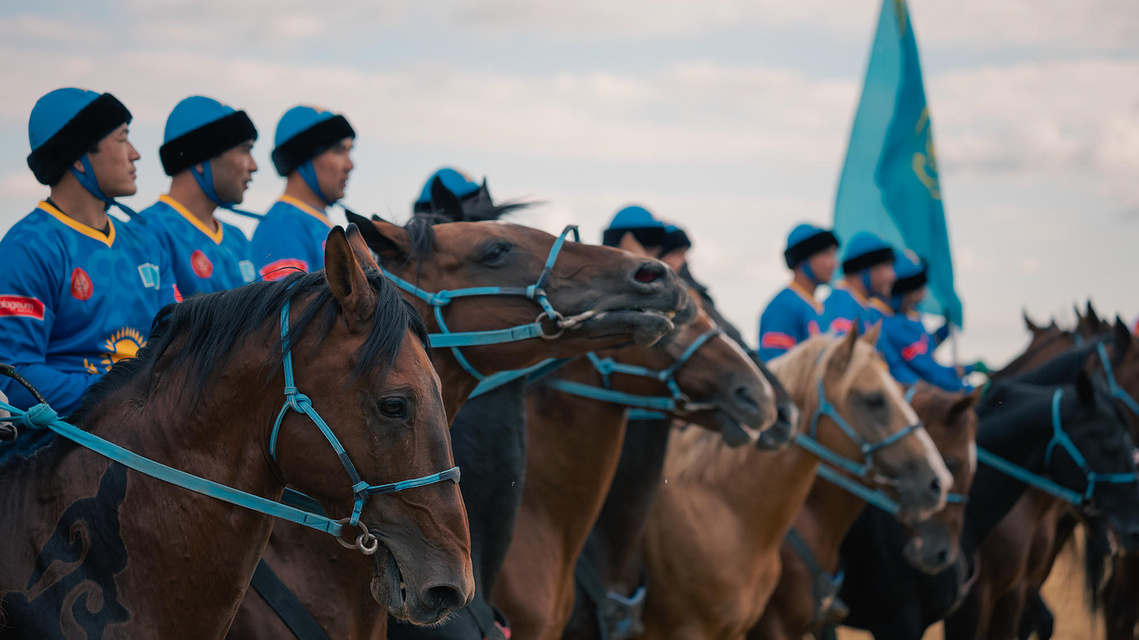
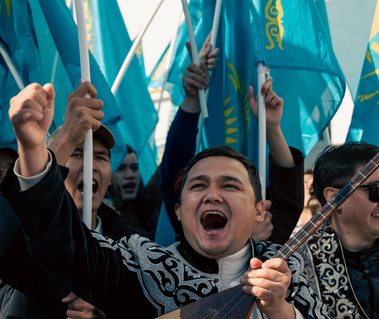
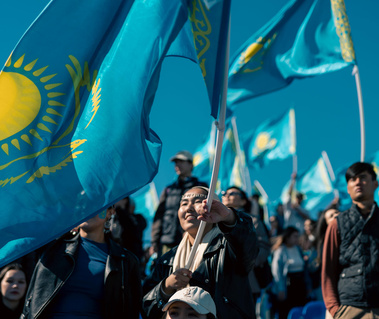
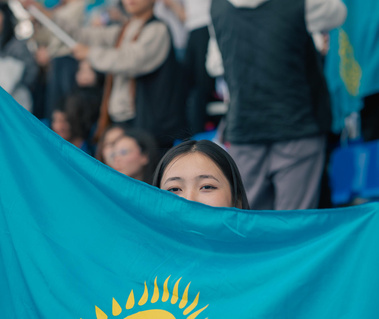
Looking extremely victorious and refreshed, man and horse trot back to their team’s lines. The referee returns what is left of the goat to the center of the field, and riders on both sides line themselves for another charge. The Kazakh’s blue national flags lap like waves against the shore of the endless sky.
Do the horses like the game? Do they enjoy charging into other horses and running laps around a field? “The Kazakh and us Kyrgyz, we are brothers. Well except during Kok Boru.” said our friend Beksultan, as we stood by the sidelines, watching the finals. “Us Kyrgyz, other teams borrow our horses. Our horses love this sport.” He looked extremely at ease, as a Kazakh rider snatched the goat and galloped away, the horse’s eyes round and wild, its tongue lolling.
20 minutes later, The hosts lost to their neighbours down south, and the Kazakhs and Kyrgyz crowds dissipated from the stadium. By tradition, the winning team gets to eat the goat.


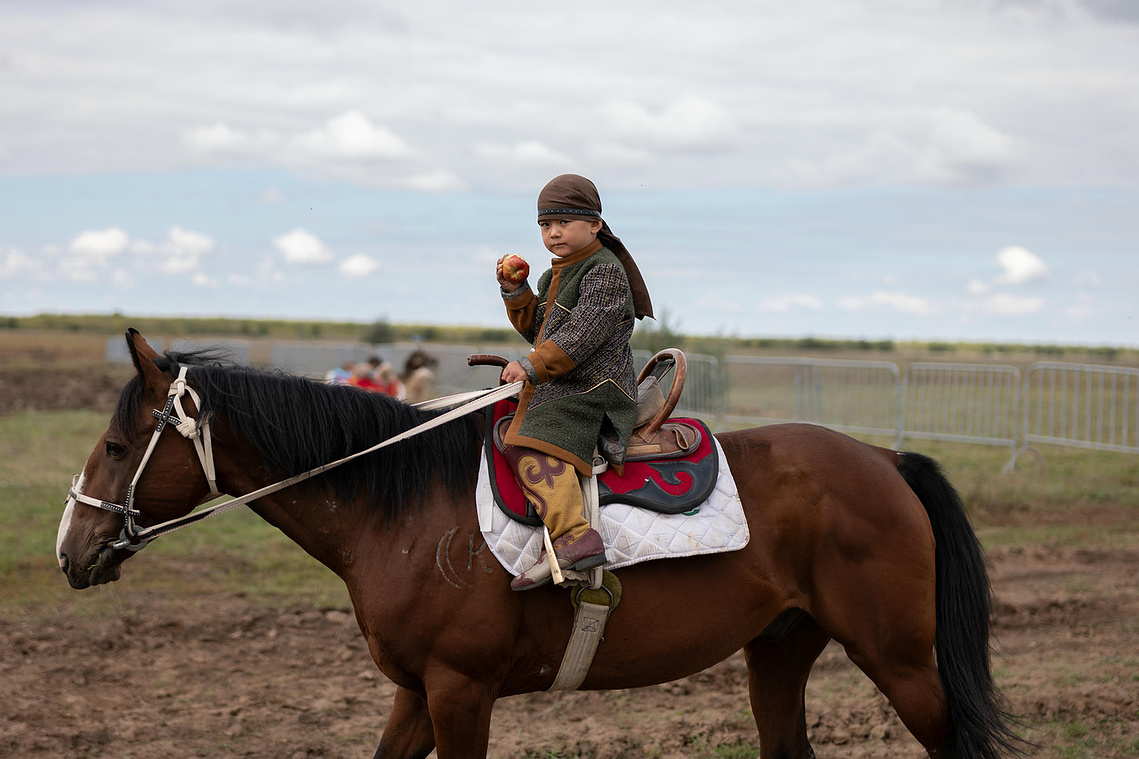
In a bubble of quiet, a young boy sits on his horsy throne and ambles across the grassland. He holds an apple almost as big as his face, and from his stately perch he peers down at me with serene grace. His horse snorts once, flicks some mud my way, and they return to the noise, parting through the explosion of the festival like a great monumental ship.